
Bone Of Contention: Is MMF An Investment Or Savings Account?
If you’ve ever invoked a conversation about Money Market funds you’ve probably been met with a strong debate that rivals if eating ‘madodo’ is better with rice or chapati. Some people view MMFs as essentially savings with a glamorous twist while others see them as investments. This article will settle the debate by presenting clear facts and comparisons.
In a previous article, I wrote about Unit Trusts, also known as Collective Investment Schemes. Think of it like a ‘chama’ with a professional manager. Investors purchase units of a fund, the money invested is pooled and allocated to different asset classes performance is measured against a benchmark e.g., 91-day or 182-day Treasury Bill.
Disclaimer: Investing in all financial assets carries risks, and past performance (empirical data) is not indicative of future results. Make sure to do your own due diligence and if you prefer can consult with a financial advisor to guide you before making any investment decisions. Be sure to confirm you are dealing with a registered and approved financial advisor and don’t share your personal details; security details included.
For example:
- Equity Fund, as the name suggests would invest the pooled money in stocks and shares or simply equities. Fund manager actively rebalances the portfolio to control exposure to fluctuating market rates.
- MMF distribute the pooled money across short-term investments with very low risk levels e.g., Treasury bills, commercial papers etc. the return earned by the fund is distribute to the investors in form of interests.
Below is a pyramid showing where each fund sits based on their risk and return; with low risk-low return at the bottom and high risk-high return at the top.
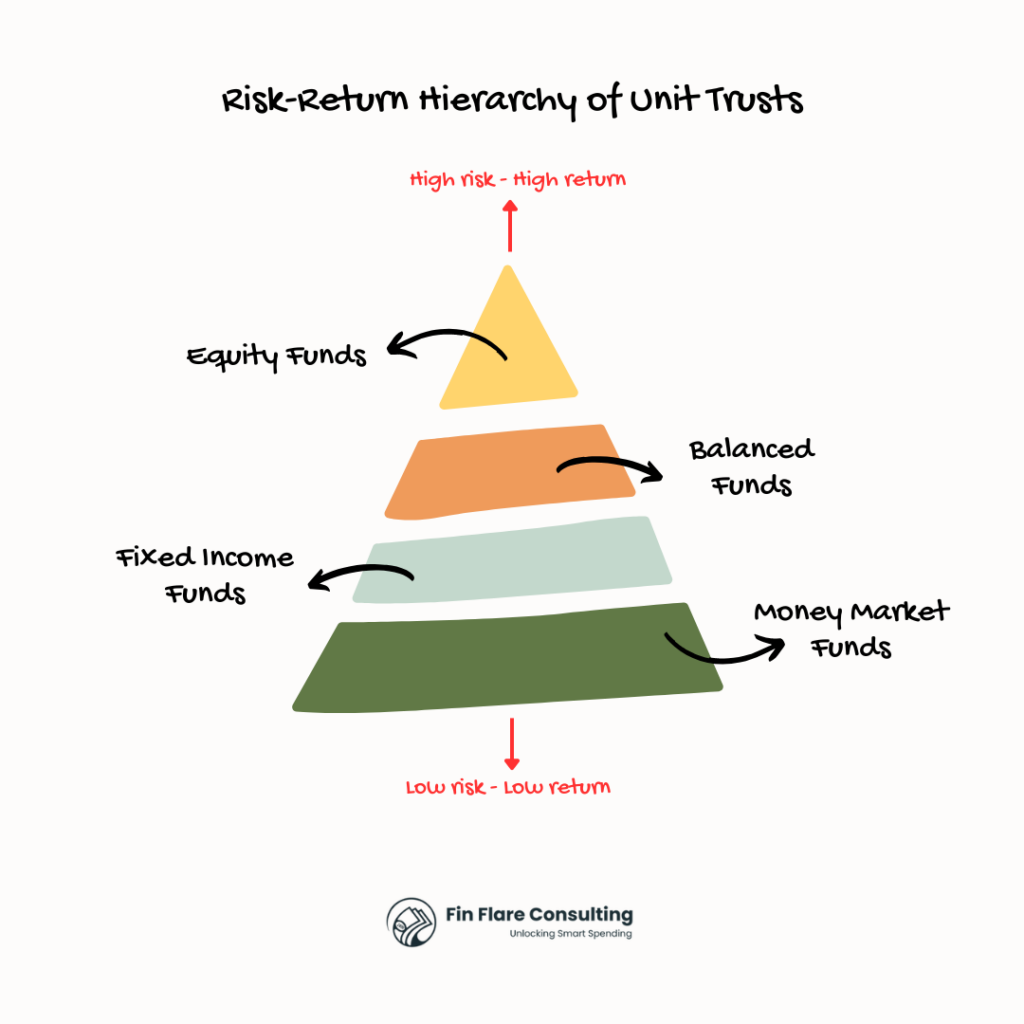
Although MMF sits at the base, it’s low returns still don’t equate to those of a savings account. Let’s distinguish the two in much more detail:
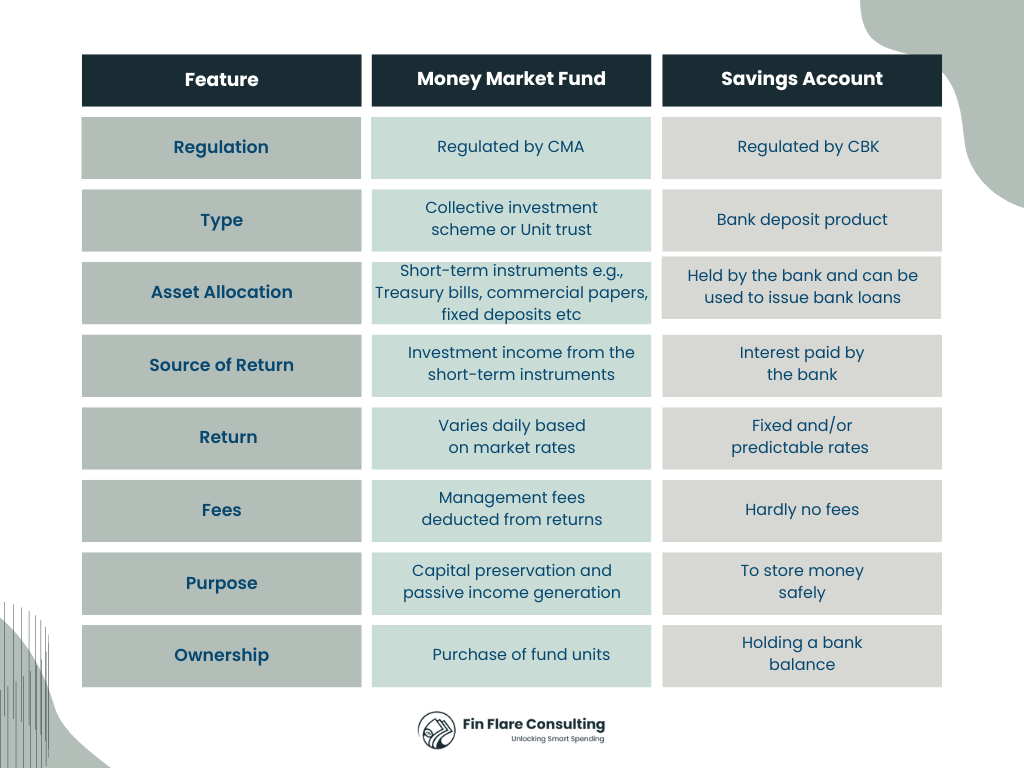
With the above comparison it’s clear and we can agree MMF is a calm, less dramatic investment that offers stable returns with low risk exposure and actively reflects investment performance based on market rate fluctuations. MMFs sits at the bottom of the pyramid but not outside it.
Saving account, on the other hand, is money held by the bank without being invested in any financial assets but rather at the discretion of the bank can be used to issue bank loans.
Next time you hear someone saying ‘MMF ni savings account tu’ you can confidently tell them it’s an investment.